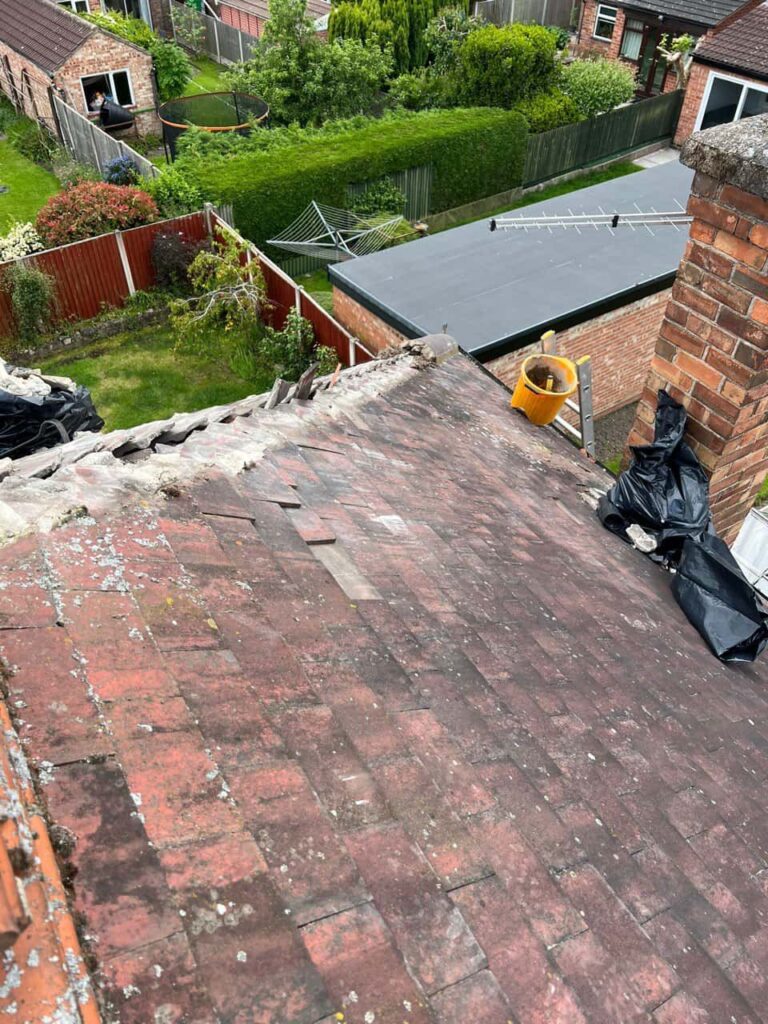
Small roof repairs can be entirely appropriate when defects are genuinely isolated. Replacing a damaged tile, correcting a localised flashing problem or securing a small vulnerable area can restore dependable protection without unnecessary wider work. Problems can arise, however, when a roof repeatedly receives minor repairs while the underlying reason for those defects remains unidentified.
For property owners in Sedgley, West Midlands, recurring roofing problems deserve more than repeated attention to the latest visible symptom. Moisture, deterioration of supporting materials and weaknesses beneath the roof covering can sometimes develop out of sight. Understanding whether small defects are connected can help prevent hidden damage from progressing unnoticed.
When Can Repeated Small Roof Repairs Become a Warning Sign?
The important distinction is between occasional maintenance and a developing pattern of problems. One isolated repair on an otherwise sound roof is very different from several repairs occurring within the same area or across multiple sections over a relatively short period.
When problems keep returning, it becomes increasingly important to assess the wider roof. The objective is not to assume that extensive work is required, but to establish whether the visible defects are separate incidents or symptoms of deterioration affecting the roofing system beneath them.
A Visible Defect May Only Be Part of the Problem
Roofing problems are often first noticed through obvious signs such as a slipped tile, a damp ceiling or damaged flashing. These signs identify that something requires attention, but they do not always reveal the complete extent of the defect.
For example, replacing a damaged tile may close the visible opening, yet moisture that previously entered beneath the covering could already have affected nearby materials.
A successful repair therefore depends on understanding what has happened around and beneath the visible defect rather than concentrating exclusively on what can be seen from outside.
Water Can Travel Beneath the Roof Covering
Water ingress is particularly important because the location of an internal damp patch does not necessarily correspond with the point where rainfall entered the roof.
Once beneath tiles or slates, moisture can travel along underlay, battens and other components before becoming visible inside the property. This can make a roofing problem appear highly localised when the actual source is elsewhere.
Repeatedly repairing the area above an internal symptom may therefore fail to resolve the issue if the original entry point has not been identified.
Hidden Moisture Can Affect Supporting Materials
Tiles and slates are only the outer layer of a pitched roofing system. Beneath them are components that help support the covering and provide additional protection.
If water repeatedly reaches these concealed areas, deterioration can continue without being immediately obvious from ground level. A surface repair may improve the external appearance while leaving affected materials beneath requiring further attention.
Where there has been repeated water ingress, assessing accessible underlying components can help determine whether damage extends beyond the visible covering.
Several Minor Defects May Be Connected
A roof developing several apparently small problems does not necessarily have several unrelated faults.
A slipped tile, recurring leak and deteriorating section nearby may all result from the same underlying weakness. Treating each symptom individually can make the problems appear resolved temporarily without addressing what connects them.
Looking at the affected section as a whole can reveal patterns that are difficult to identify when every repair is considered independently.
Repeated Tile Movement Can Indicate a Deeper Weakness
One displaced tile may simply require a localised repair. Tiles repeatedly slipping within the same section deserve closer investigation.
The issue may involve fixings or supporting battens rather than the tiles themselves. If the underlying support has deteriorated, repositioning individual tiles may not prevent neighbouring coverings from moving later.
This is a good example of why the cause of repeated defects matters more than the number of individual repairs completed.
Flashing Problems Can Be More Complex Than They Appear
Flashing protects vulnerable roof junctions where different surfaces or components meet.
A small visible gap can sometimes be repaired locally, but recurring water ingress around the same junction may indicate that a larger part of the detail is no longer performing correctly.
Repeatedly sealing isolated points without examining the complete junction can leave another route for water nearby. Where the same area continues causing problems, broader investigation is generally more useful than another surface-level repair.
Valleys Need to Be Considered as Complete Drainage Routes
Roof valleys carry concentrated quantities of rainwater from adjoining slopes.
A problem may become visible near the lower part of a valley even though the actual weakness is located further up. Water entering beneath the covering can travel before showing obvious signs.
Where repeated repairs have been made around a valley without resolving water ingress, inspecting the complete affected detail can help identify whether deterioration has been missed elsewhere.
Previous Repairs Can Conceal Useful Evidence
A roof that has undergone numerous small repairs can sometimes become more difficult to assess.
Different repair materials and patched areas may obscure the original construction or make it less obvious how a defect first developed. Water can also travel around previous work and emerge somewhere different.
This does not mean previous repairs were necessarily inappropriate. It means that when problems continue, the history and condition of those repairs should form part of the wider investigation.
New Problems Near Old Repairs Deserve Attention
If defects repeatedly appear close to previously repaired sections, it is worth asking whether the surrounding materials are also deteriorating.
An original repair may remain perfectly sound while an adjoining tile, fixing or roof detail develops a new weakness. In this situation, repeatedly extending repairs one small area at a time may indicate that deterioration is gradually progressing through the section.
Assessing the condition beyond the immediate defect helps establish whether this is occurring.
Internal Signs Can Reveal More Than the Roof Surface
Evidence inside the property can provide useful information about how the roof is performing.
Damp marks, discolouration or moisture appearing repeatedly after rainfall can indicate that water ingress has not been fully resolved. The position, size and development of these signs can also help when tracing the likely source.
An internal inspection considered alongside the external roof condition can provide a more complete understanding than either assessment alone.
Small Repairs Are Still Valuable When the Problem Is Localised
The possibility of hidden deterioration does not mean small repairs should be avoided.
Targeted roof repairs remain entirely appropriate where the defect has been properly identified, the surrounding materials are sound and there is no evidence of wider deterioration. In these circumstances, repairing only what requires attention avoids unnecessary disruption to serviceable parts of the roof.
The key is confidence that the problem really is localised.
When Does a Wider Roof Assessment Become Sensible?
A broader inspection becomes increasingly worthwhile when there is a pattern rather than a single isolated defect.
Useful warning signs include:
- Repairs repeatedly being required in the same section
- Different roofing problems developing within short periods
- Water ingress returning after previous work
- Several tiles or slates becoming loose or displaced
- Deterioration appearing around earlier repair areas
- Dampness becoming more extensive internally
- Visible changes across a larger section of the roof
None of these automatically means the roof needs replacing. They indicate that understanding the overall condition has become more important.
Hidden Damage Does Not Automatically Mean Roof Replacement
Discovering deterioration beneath the visible covering does not necessarily mean that complete roof replacement is required.
If the affected materials are confined to a defined section and the remainder of the roof remains serviceable, appropriate sectional repairs may restore reliable performance. The damaged area can be addressed while sound roofing is retained.
More extensive work becomes relevant when deterioration is widespread or when numerous components across the roof are beginning to fail.
Why Finding the Root Cause Matters
A lasting roof repair should correct the reason a problem developed, not simply remove its most obvious symptom.
At Sedgley Roofing Repairs, we consider the visible defect alongside surrounding roof coverings, junctions, previous repair areas and signs of moisture penetration. Where problems have occurred repeatedly, looking at the wider section can help determine whether hidden deterioration is contributing.
For properties in Sedgley, West Midlands, this diagnostic approach helps ensure that recommendations are based on the actual condition of the roof rather than assuming every small defect is either completely isolated or evidence that extensive work is needed.
Early Investigation Can Help Protect Sound Areas
One of the main reasons to investigate recurring problems is to prevent deterioration from unnecessarily extending into roofing materials that remain serviceable.
If moisture penetration or movement is identified while it is still concentrated within a limited section, corrective work can focus on that area. Allowing the underlying cause to continue can potentially expose neighbouring components to the same problem.
Timely assessment is therefore about preserving sound roofing as much as repairing damaged materials.
Conclusion
Continuing with small roof repairs can allow hidden damage to spread when the work repeatedly addresses visible symptoms without identifying an underlying problem. Water can travel beneath roof coverings, supporting materials can deteriorate out of sight, and several apparently separate defects may actually be connected.
This does not mean that every roof requiring several repairs needs extensive work. Small repairs remain highly effective when problems are genuinely localised. The warning sign is a recurring pattern that suggests the roof should be assessed more broadly.
If your property in Sedgley, West Midlands has required repeated roof repairs or the same problems continue returning, contact Sedgley Roofing Repairs. We can assess the affected areas, investigate the underlying cause and recommend appropriate work based on the actual condition of your roof.
Call us on: 01902 943 599
Click here to find out more about Sedgley Roofing Repairs
Click here to complete our contact form and see how we can help with your roofing needs.